Foodservice Packaging
How does Zerocircle turn seaweed & natural polymers into packaging? A step by step look
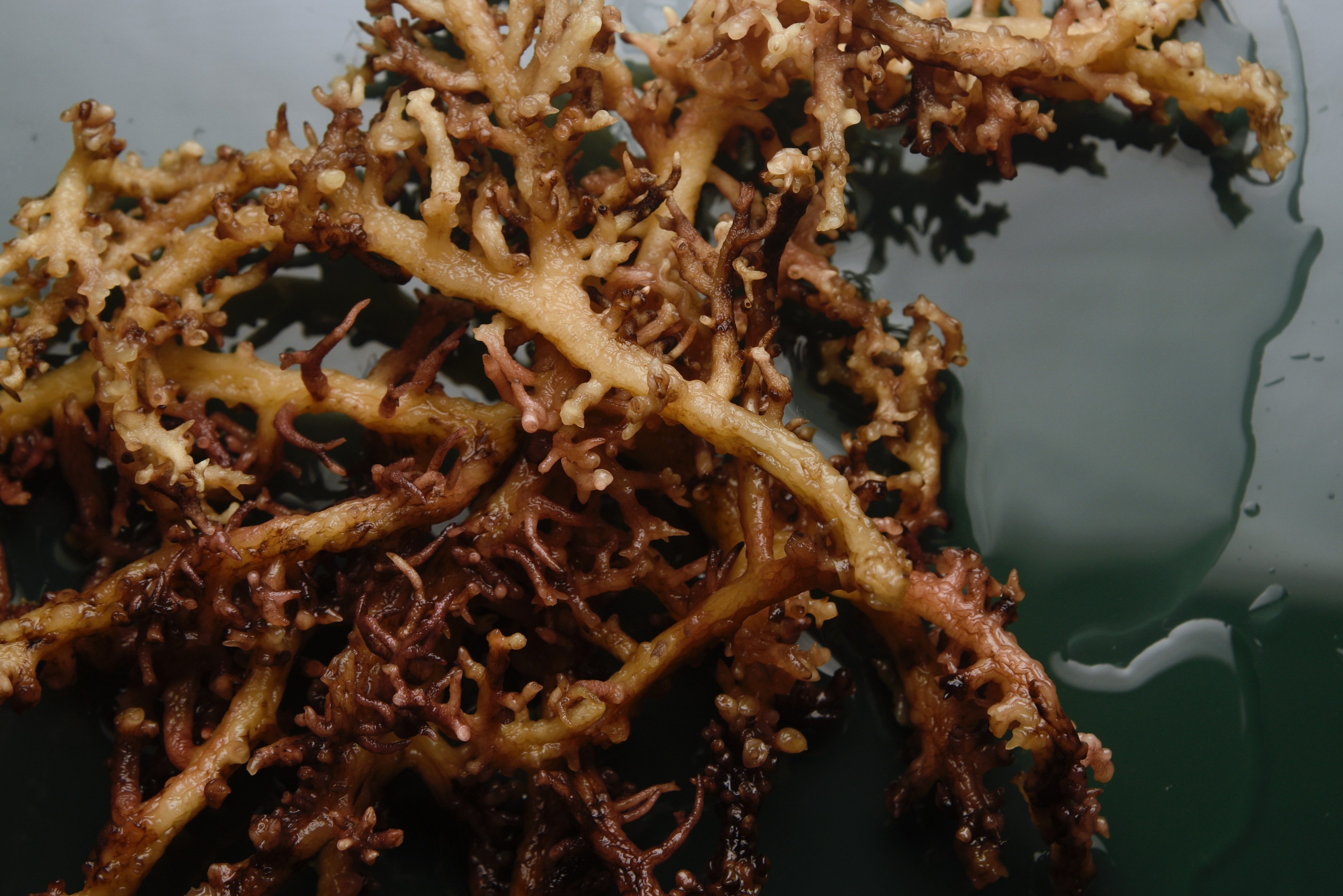
Seaweed for material use is sustainably harvested, not scraped off a beach or plucked by hand. In India, growers use different methods.
From coastal rope farms to coated paper cups: how seaweed becomes packaging material, what each stage of the process actually involves, and where the real engineering challenge sits.

Zerocircle Staff
|
Share this post


The honest answer is less exotic and more industrial than people expect. Seaweed is not moulded into a container. It is taken apart, and one specific fraction of it is put to work doing a job that fossil polymers currently do.
It starts on a rope
Seaweed for material use is sustainably harvested, not scraped off a beach or plucked by hand. In India, growers use different methods of sustainably cultivating this underrated feedstock. Some grow it on rope lines in shallow coastal water and some deploy it through bamboo rafts in the ocean. But all these farms are tended largely by women in coastal farming communities. For most of them, fishing is no more a dependable source of income. The rising temperature of the sea and the fast changing global climate, makes fishing a tricky occupation for a community for whom this was the mainstay occupation.
But seaweed, has changed that. Seaweeds are among the fastest growing organisms on earth. Harvest cycles are measured in weeks rather than seasons, and a single rope line can be cropped several times a year. Size varies enormously across the family, from fronds a few centimetres long to kelps that reach tens of metres, but the growth rate is a constant.
The speed comes from what seaweed does not have to build. A land plant spends most of its energy on structure: lignin and cellulose to hold itself upright against gravity, roots to find water, vascular tissue to move it around. Seaweed is held up by the water it sits in and bathed in the nutrients it needs, so almost everything it produces goes into growth.
That same absence explains the polymers. Without the job of staying rigid, seaweed builds flexible, water-binding chains rather than stiff structural ones. Those chains are the reason it can form a film at all.
This biomass after removal from the oceans, is washed to remove salt, sand and other growth, and is sun dried into bales. Nothing sophisticated has happened yet. At this stage the material looks like hay.
Extraction is the real beginning
Inside the cell walls of different kinds of seaweeds sit the polymers we need: agar, carrageenan, alginate. If those names look familiar, it is because they have been in food for decades, thickening ice cream and setting jellies. These are long chain polysaccharides, which are, what we call natural polymers. They are what give seaweed its structure in water, and what gives it the capacity, once extracted, to form a continuous film.
Extraction is a controlled cooking process. Dried biomass is treated in hot water under alkaline conditions, which pulls the target polymer into solution and leaves the fibrous residue behind. Filtration separates the two. What comes out is a viscous solution, not a solid. That distinction shapes everything that follows.
Formulation is where the engineering sits
A raw polymer solution will dry into a brittle, water hungry film. Useless.
Turning it into packaging material means blending it with other plant derived polymers until it does three things at once: hold grease out, take a print, and seal to itself under heat.
That last one has been the sticking point for the entire field. A coating that resists water and grease is achievable. A coating that resists water and grease and still forms a reliable heat seal, with no fluorochemicals anywhere in the formulation, took considerably longer. It is the piece our team spent the most time on, and clearing it is what moved the coating from interesting in a lab to usable on a paper cup.
It has to run on somebody else's machine
This is the constraint that decides whether a material becomes packaging or stays a prototype. Converters have capital sunk into existing coating and forming lines. A material that demands new equipment does not get adopted, however good its end of life story is.
So, the formulation is applied like any conventional coating, at line speed, onto paper or board, and dried in the existing oven. The converter changes the input, not the plant. From there the stock is cut, formed and sealed exactly as before. The finished cup or wrap goes into the paper recycling stream, and composts if it does not get there.

Where do these materials work?
Today these materials are strongest in single-use foodservice: burger wraps, fries cartons, pizza liners, bakery bags, paper cups. That is not a small corner of the problem. Single-use packaging is the most damaging category in the industry, made in enormous volume, used for minutes, and then left to go somewhere. It is also where fluorochemical coatings and thin plastic laminates have been hardest to dislodge, because the pack has to hold grease and moisture from the moment it is filled to the moment it is opened.
That is the job natural polymer coatings already do at commercial volume. Dry ambient goods and produce films are close behind. The work now is extending the range, into longer shelf life, higher temperatures and wider formats, and each of those is an engineering problem with a timeline rather than a wall.
The PFAS restriction under EU packaging rules has been in force since August 2026, and recyclability criteria follow in 2030. Grease resistance without fluorochemicals stopped being a differentiator this year and became a condition of sale.
So, strictly speaking, seaweed does not turn into packaging. A polymer inside it does, once the chemistry, the formulation and the factory floor are made to agree.

Summary
Seaweed is not moulded into a box. It is farmed on rope lines, dried, and then cooked under controlled conditions to extract the natural polymers held in its cell walls. That polymer solution is formulated with other plant polymers into a coating or film, applied to paper or board on existing converting equipment, and formed into packaging the same way it always was. The hard part is not making a film. It is making one that resists grease and water, seals under heat without fluorochemicals, and runs at commercial line speed.
Seaweed Packaging
PFAS-free Barrier Coating
Natural Polymer Packaging
Share this post